English
 русский

 Company Profile

 Nov 27, 2026
 Industry News
Oil Absorbent Materials: Types, Features, Applications, and Selection Guide
A small drip under a pump rarely looks serious. Left alone, it turns into a slick patch on the floor, a slip risk for staff, and an extra job for the maintenance crew. The right Oil Absorbent Materials won't stop a leak. They do keep it from spreading, and they make the cleanup far easier. The catch is that oil type, site conditions, and spill size all change which product works best. This guide explains how absorbents work, what affects their performance, and how to match a product to your facility.
What Are Oil Absorbent Materials?
Oil Absorbent Materials are products made to soak up oil-based liquids and hold them in place. They are used on floors, around machinery, and, in some cases, on water. You will find them in factories, workshops, and spill response kits. How well a product performs comes down to four things: what it is made of, how its fibers are arranged, how thick it is, and what kind of liquid it meets.
How Do Oil Absorbent Materials Work?
Most absorbents pull liquid in through surface wetting and capillary action. The oil then stays trapped in the gaps between fibers, or inside pores and absorbent layers. Polypropylene nonwovens are a common choice in industrial products. Manufacturers can adjust their fiber structure and surface behavior to suit a given job. Other products rely on natural fibers, mineral materials, or specially treated compounds. Several variables shape the result:
- Liquid properties: Thick, cold oil moves into a material more slowly than thin, warm oil. Composition matters too.
- Material structure: Fiber diameter, pore size, thickness, and density all affect how much liquid goes in and how much stays.
- Contact conditions: More surface contact and more time generally mean more oil collected.
- Product construction: Bonded layers, surface treatments, and reinforcing structures change both handling and retention.
Don't judge capacity by looks. A fluffy pad is not necessarily a better one. Check the manufacturer's specifications and the test method behind them.
Common Types of Oil Absorbent Materials
Absorbents come in several shapes, and each shape suits a different situation.
- Oil Absorbent Pads: Flat sheets for wiping surfaces, catching small drips, and collecting oil near machines.
- Oil Absorbent Rolls: Continuous material you cut to length. It works well under equipment or along walkways.
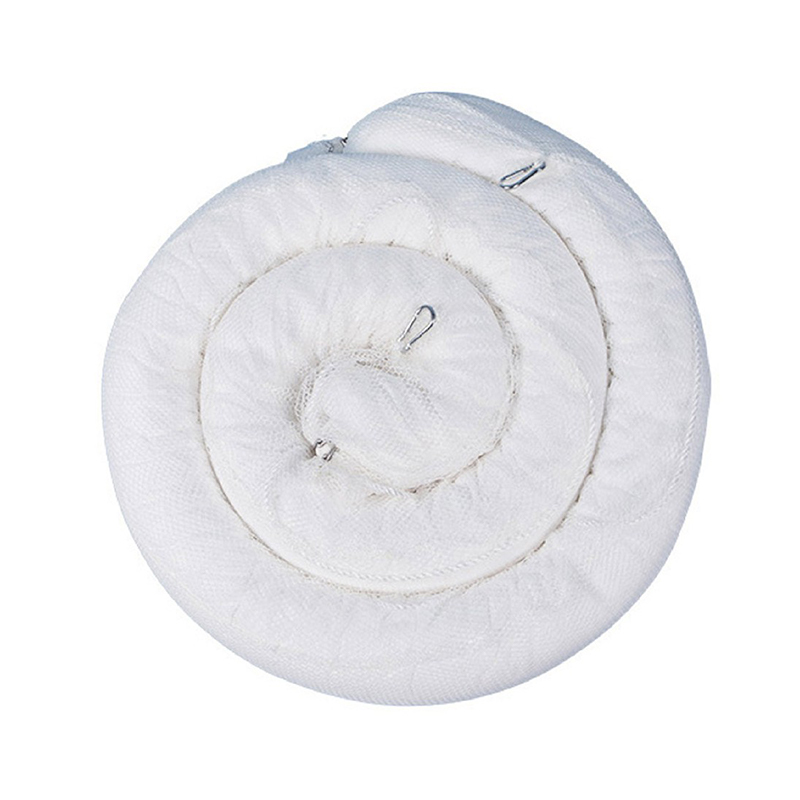
- Oil Absorbent Socks: Flexible tubes you lay around a spill to slow its spread.
- Oil Absorbent Booms: Longer containment products, mostly for outdoor use or on water.
- Oil Absorbent Pillows: Thick cushions that sit under a leaking component or where liquid collects.
- Granular Absorbents: Loose particles spread across a surface, depending on their composition and intended use.
As a rule of thumb, pads and rolls handle surface absorption. Socks and booms handle containment. Granules can help on rough or uneven ground. What you can actually buy depends on each manufacturer's range.
Oil-Only Absorbents vs. Universal Absorbents
The main difference is which liquids each type is built to collect.
| Absorbent type | Main function | Typical applications |
| Oil-only absorbents | Take up suitable oil-based liquids and repel water | Oil on water, outdoor leaks, petroleum-based liquids |
| Universal absorbents | Take up oils and a range of water-based liquids | General maintenance, coolant spills, mixed-liquid cleanup |
| Chemical absorbents | Handle specified chemicals once compatibility is confirmed | Chemical handling areas, designated spill response |
Choose oil-only when water rejection matters. A good example is collecting oil from a wet surface or from open water. Universal products fit maintenance areas, where oil, water, and compatible process fluids often mix. Chemical absorbents need their own compatibility check. Some liquids are corrosive or reactive, and some are simply unknown. For those, read the product's chemical compatibility data first.
Features of Oil Absorbent Materials
Soaking up liquid is only part of the picture. Capacity, oil selectivity, retention, strength, and format all decide whether a product suits your site.
Absorption Capacity and Liquid Retention
Capacity is how much liquid a material takes up under defined test conditions. It is useful, but it is not the whole story. Viscosity, temperature, contact time, construction, and the test method itself can all move the number. Retention matters just as much. Picture a saturated pad being lifted from the floor. If it drips all the way to the bin, the cleanup isn't finished. Good retention and enough strength to hold together make that step much simpler. When comparing products, look at:
- Capacity under a stated test method
- The type of oil used in testing
- Retention while lifting and handling
- Strength before and after absorption
- Weight, thickness, and dimensions
- Disposal requirements
Compare figures only when they come from similar test conditions. Two unrelated capacity claims tell you very little.
Oil Selectivity and Material Structure
Selectivity means taking up oil in preference to water. Many oil-only products are hydrophobic. They shed water while collecting compatible oil. That is a real advantage outdoors and on water. Universal products, by design, take up both. Structure counts too. Fiber layout, porosity, density, thickness, and surface treatment all affect how liquid gets in and whether it stays. Thickness is a good example of a misleading signal. A thicker product has more material in it, but that does not guarantee higher capacity. The full construction and the liquid involved decide the outcome.
Product Format and Handling Characteristics
Each format suits a different physical setting:
- Pads suit small drips and localized spills.
- Rolls cover longer stretches beneath equipment or along maintenance zones.
- Socks and booms mark out a boundary and limit movement.
- Pillows sit near leak points or where oil gathers.
- Granules can reach awkward, uneven surfaces.
Pick based on where the spill is, how much liquid you expect, how much room you have, and how you plan to collect the used material. Handling deserves a thought as well. A product that is awkward to place or hard to retrieve can make cleanup harder, even if its absorption is perfectly good.
Factors That Affect Oil Absorption Performance
Real-world conditions change how an absorbent behaves. These are the ones to watch:
- Oil viscosity: Heavy oils spread and penetrate differently from light ones.
- Temperature: Heat thins oil and cold thickens it, so absorption changes with it.
- Fiber and pore structure: The layout of fibers and open space controls uptake and retention.
- Contact area: More contact between liquid and material usually helps.
- Exposure time: Oil needs time to work its way in.
- Water exposure: For oil-only products, water repellency is critical when the oil sits on a wet surface or on water.
This is why a product that works well in one setting can disappoint in another. Technical data, plus a trial under your own conditions, is a far better guide than a single headline number.
Common Applications of Oil Spill Absorbent Materials
Oil Spill Absorbent Materials turn up in many industrial and maintenance settings:
- Manufacturing facilities: Pads or rolls beside machines that may leak lubricating oil or hydraulic fluid.
- Equipment maintenance: Catching oil during inspections, servicing, and routine repairs.
- Workshops and repair areas: Dealing with drips and accidental releases on compatible surfaces.
- Oil storage and handling areas: Responding to spills around containers, equipment, and designated handling zones.
- Outdoor environments: Oil-only products can collect compatible oils where water rejection is needed.
- Water-based spill response: Purpose-built oil-only booms and pads can pick up compatible oil from the water surface. Whether they suit the job depends on flotation, retention, and the manufacturer's environmental-use specifications.
Remember that absorbents are only one piece of spill management. Depending on the liquid and the size of the spill, you may also need containment, protective equipment, site procedures, and proper waste handling.
Why Choose Yidaxin Oil Absorbent Materials?
Any supplier decision should rest on documented evidence, not slogans. Claims about a brand's manufacturing, customization, or testing should be confirmed before you treat them as fact. So when you assess Yidaxin as an Oil Absorbent Material Supplier, ask how closely its proposed products fit your application:
- Application fit: Does the specification cover your oil type, leak location, cleanup frequency, and removal method?
- Configuration options: Are size, basis weight, thickness, format, and packaging documented for your use case?
- Performance evidence: Do absorption claims come with test conditions and clear units?
- Consistency controls: Can you review specification tolerances and batch quality records?
- Technical support: Where offered, can the supplier help with material guidance and sample evaluation before you commit?
A representative sample is worth requesting. Test it under realistic conditions and follow your safety procedures. It adds to the technical documentation and does not replace it.
How to Choose the Right Oil Absorbent Material
Start by pinning down what you are dealing with, then work toward a product. Here is a practical sequence.
Step 1: Identify the liquid. Find out what the oil is. Check whether it contains water, additives, solvents, or anything else. If you can't tell what it is, don't assume a standard oil-only product is safe to use.
Step 2: Determine the working environment. Is the spill on a hard floor, around machinery, outdoors, or on water? Wet conditions and surface type can change the right choice a great deal.
Step 3: Estimate the spill volume and coverage area. Decide whether you face occasional drips, a steady leak, or a large release. Use documented absorption data to estimate how much material you need, and allow a margin for the limits of the test conditions.
Step 4: Select the appropriate product format. Use pads for localized spots and rolls for longer coverage. Use socks or booms to contain. Other formats may fit better depending on the surface and the product's intended purpose.
Step 5: Compare material and performance specifications. Look at composition, thickness, size, strength, capacity, and retention. Keep test conditions consistent across the products you compare.
Step 6: Plan collection and disposal. Used absorbents can hold concentrated oil or other hazardous substances. Decide how you will collect, store, and dispose of them. Base that on the liquid's properties, its safety documentation, and the regulations that apply to you. Working through these steps ties your choice to real operating conditions. It also keeps you from leaning on a single number or a generic product description.
Frequently Asked Questions
What Are Oil Absorbent Materials Used For?
They collect and hold compatible oil-based liquids from equipment, floors, maintenance areas, and some water environments. Typical uses include controlling machine leaks, industrial maintenance, workshop cleanup, and spill response. The right material depends on the liquid, the location, and how you plan to handle the waste.
What Is the Difference Between Oil-Only and Universal Absorbents?
Oil-only absorbents collect compatible oil-based liquids and repel water. Universal absorbents collect both oil-based and water-based liquids. Oil-only products can work for oil on water. Universal ones are the usual pick for general maintenance with mixed, compatible liquids.
How Do You Choose Oil Absorbent Materials?
Identify the liquid, look at the environment, estimate the volume, and pick a format. Then compare composition, capacity, retention, and strength. Check chemical compatibility and disposal requirements before you use the product.
Can Oil Absorbent Materials Absorb Water?
It depends on the product. Oil-only absorbents are built to repel water. Universal absorbents take up both oil and water-based liquids. Read the specifications, because water resistance and selectivity differ with construction.
What Factors Affect Oil Absorption Capacity?
Viscosity, temperature, fiber structure, thickness, contact area, and exposure time all play a part. The test method also changes the reported figures. When you compare products, check the test conditions and make sure the results apply to your use.
How Should Used Oil Absorbents Be Disposed Of?
Treat them according to what they have absorbed, your safety requirements, and local waste rules. Find out whether the material counts as hazardous waste. Wear suitable protective equipment and follow approved collection and disposal procedures. Never assume used absorbents can go out with ordinary trash.
Oil Absorbent Materials help keep plants running, leaks under control, and spills contained. Knowing how oil-only, universal, and chemical absorbents differ makes it much easier to choose. Weigh format, capacity, retention, structure, and disposal together instead of fixating on one factor. For companies sourcing industrial absorbents, the task is simple to state. Match documented product specifications to the conditions on your floor. Visit the Yongda-Tex Oil Absorbent Materials page to review product information and confirm the details that apply to your application.
 479067683@qq.com
 +86 - 512-63516211
 +86 - 15895525966
 Group 9, Qianzhuang Village, Shengze Town, Wujiang District, Suzhou City, Jiangsu Province, China